Water regulation
Water is necessary for biological growth. During the composting process, a water content of 50-60% by weight is beneficial to microbial decomposition. The moisture content of livestock manure is generally 75~80%, and straw liver with relatively low moisture content is generally used for regulation.
Control the fermentation temperature
One of the important conditions for the normal fermentation of organic materials is the appropriate temperature. In areas with cold climates, in order to ensure the normal progress of the fermentation process, heating and heat preservation measures are required. At present, the more economical and feasible method is to use solar energy.

Microphone heating and insulation
The principle of the greenhouse can be used to design fermentation facilities. Fermentation facilities should use roofing materials and wall materials such as PVC or FRP with good light permeability and durability. Fermentation facilities should be well closed in winter and have good thermal insulation properties. At the same time should be ventilated.
Adjust the carbon to nitrogen ratio
Usually the carbon-nitrogen ratio of livestock manure is lower than 20.1, and the carbon-nitrogen ratio of straw is higher than 50.1, then if the carbon-nitrogen ratio of the fermentation co-feed is adjusted to 25~35:1, a part of the livestock manure can be added Straw, on the one hand, adjusts the carbon-nitrogen ratio, on the other hand, due to the low moisture content of the straw, it can also play a role in adjusting the moisture content of the material.
Turn the pile
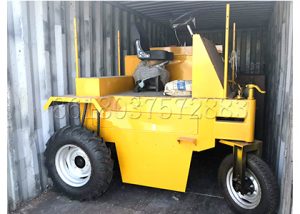
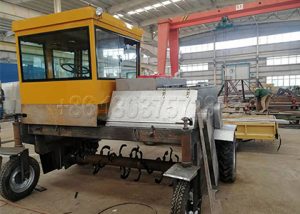
Ventilation is an important factor that affects composting temperature and fermentation effect. The purpose of turning the pile is to improve the aeration conditions in the pile, dissipate water, promote the reproduction of high-temperature beneficial microorganisms, make the pile temperature reach 50~70C, and accelerate the conversion of fermented materials, so as to achieve uniform mixing, consistent heating, and consistent maturity. It can be manually turned over, and it can also be turned over by machinery such as wheeled stackers, loaders, and deep-chun aerobic stackers. During the fermentation process, it is more appropriate to turn 1~2 times a day
Screening
In order to increase the commodity value of visible fertilizer products and facilitate packaging and storage, a screening process is generally used to sort out bulk materials. There are different types of screening equipment, such as cylindrical screens and vibrating screens. If in order to reduce investment, manual screening can also be used. The screened materials can be buried in centralized landfills or reused as fermentation auxiliary materials. Difficulties can be used as organic fertilizer products.
E-mail: info@fertilizerfactorymachine.com
TEL: + 86 180 3757 2883